Advanced Search
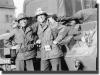
Cameras were not as common during World War II as they would become later. This fact makes these photos and images even more precious.
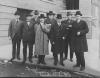
Charlotte Mayor T.L. Kirkpatrick (1877-1946) with North Carolina Governor Locke Craig (1860-1924) posed for this photograph on January 25, 1916. From left to right: Thomas L. Black (1863-1934), Justice Heriot Clarkson (1863-1942), Edmund Randolph Preston (1880-1957), Mayor Kirkpatrick, Dr.
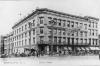
The Central Hotel was one of the longest operating hotels in Charlotte (1849-1930s.) Originally known as the Mansion House, the name was changed in the 1870s. The owners of the hotel boasted of its large, elegant ballroom.
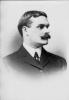
Textile Industrialist, Stuart Warren Cramer was born in 1868 in Thomasville, North Carolina. He designed a number of textile mills and villages in the Charlotte region, including the area now known as the North Davidson Historic District.
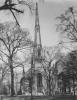
Located on West Trade Street, First Presbyterian Church was organized in 1832. This building opened in 1895.
ID Number: H_2000_01_264_34.
Image Year: 1975
Physical Description: 8x10 glossy
Category: Hornet's Nest
Format: Black and White
Senator William A. Graham (1804-1875) served in the US Senate from 1840-1843. He was the Governor of North Carolina from 1845-1849 and served as Secretary of Navy from 1850-1852.
Record implies this was James A. Jones first house on Pine Street. There is no evidence he ever resided here. It is possible the description is referring that this is the first house built by James A. Jones, the founder and president of J.A. Jones Construction.
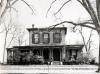
The John B. Ross House is a wonderful example of Italian Revival architecture. Built between 1894 and 1896, it was at 502 North College Street, it was the home of the John B. Ross family. He was the president of the John B. Ross Company and vice-president of the First National Bank.
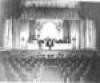
Minstrel Show at the Carolina Theatre.The Carolina Theatre opened in 1927 on the corner of North Tryon and Sixth Streets. With a seating capacity of 1,800 and beautiful architectural and decorative features, it remained popular entertaintment venue for many years.
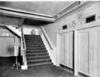
The Carolina Theatre opened in 1927 on the corner of North Tryon and Sixth Streets. With a seating capacity of 1,800 and beautiful architectural and decorative features, it remained popular entertaintment venue for many years.
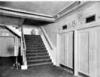
The Carolina Theatre opened in 1927 on the corner of North Tryon and Sixth Streets. With a seating capacity of 1,800 and beautiful architectural and decorative features, it remained popular entertaintment venue for many years.
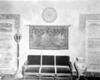
The lounge of the Carolina Theatre featured Mediterranean furniture, wall hangings and other accessories.The Carolina Theatre opened in 1927 on the corner of North Tryon and Sixth Streets.
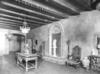
The lounge of the Carolina Theatre featured Mediterranean furniture, accessories and a decorative ceiling.The Carolina Theatre opened in 1927 on the corner of North Tryon and Sixth Streets.
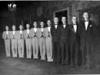
Ushers and Managers of the Carolina Theatre.The Carolina Theatre opened in 1927 on the corner of North Tryon and Sixth Streets. With a seating capacity of 1,800 and beautiful architectural and decorative features, it remained a popular entertaintment venue for many years.
Sugaw Creek Presbyterian Church is located on North Tryon Street. Founded in 1755, the building in this photograph was constructed in 1895, and it still stands. The cemetery, seen above, features dates to the mid-eighteenth century.
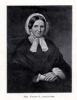
Illustration of Violet G. Alexander, daughter of Joseph Alexander. She married Dr. Moses Winslow Alexander, who was the son of J. McKnitt Alexander. Violet Alexander died in 1868 and is buried a the Hopewell Presbyterian Church.
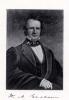
William A. Graham (1804-1875) served in the United States Senate from 1840-1843: Governor of North Carolina (1845-1849) and as Secretary of the Navy (1850-1852).The illustration is from General Joseph Graham and his Papers on North Carolina Revolutionary History (1904).

Machpelah Presbyterian Church in Lincoln County was built in 1848 on land donated by Violet G. and Moses Winslow Alexander.The illustration is from General Joseph Graham and his Papers on North Carolina Revolutionary History (1904).
Physical Description: 4x635 mm negative
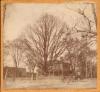
The Osborne Oak was located at West Trade and Graham Street. It was more than a 100 years old when this photograph was taken. The home belonged to Dr. Sam Hayes who married an Osborne. A horse drawn cart is in front.
Physical Description: 3x3 print35 mm negative
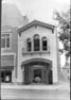
The Ratcliffe Florist at 431 South Tryon Street began operations in 1929 when Louis Ratcliffe started the business. This wonderful example of Mediterranean Revival style was designed by William H. Peeps (1868-1950).
Physical Description: 35 mm negative